Document Type : Editorial and commentary
Authors
1
Assistant Professor of Neuroscience, RIKEN Center for Brain Science, Japan
2
School of Medicine, Sabzevar University of Medical Sciences, Sabzevar, Iran
Abstract
Background and Objective: World Alzheimer's Month 2026 emphasizes the earlier recognition of Alzheimer’s disease to enable timely clinical action, planning and support. This progressive neurodegenerative disorder is the most common cause of dementia. This editorial intends to overview current evidence on early diagnosis, and life-course strategies for risk reduction and multidimensional care.
Methods: The present review relies on peer-reviewed literature, international guidelines, and commission reports on Alzheimer's disease epidemiology, diagnosis, risk reduction, and major care models such as the 2024 Lancet Commission on dementia prevention, intervention, and care and World Alzheimer's Month 2026 campaign materials.
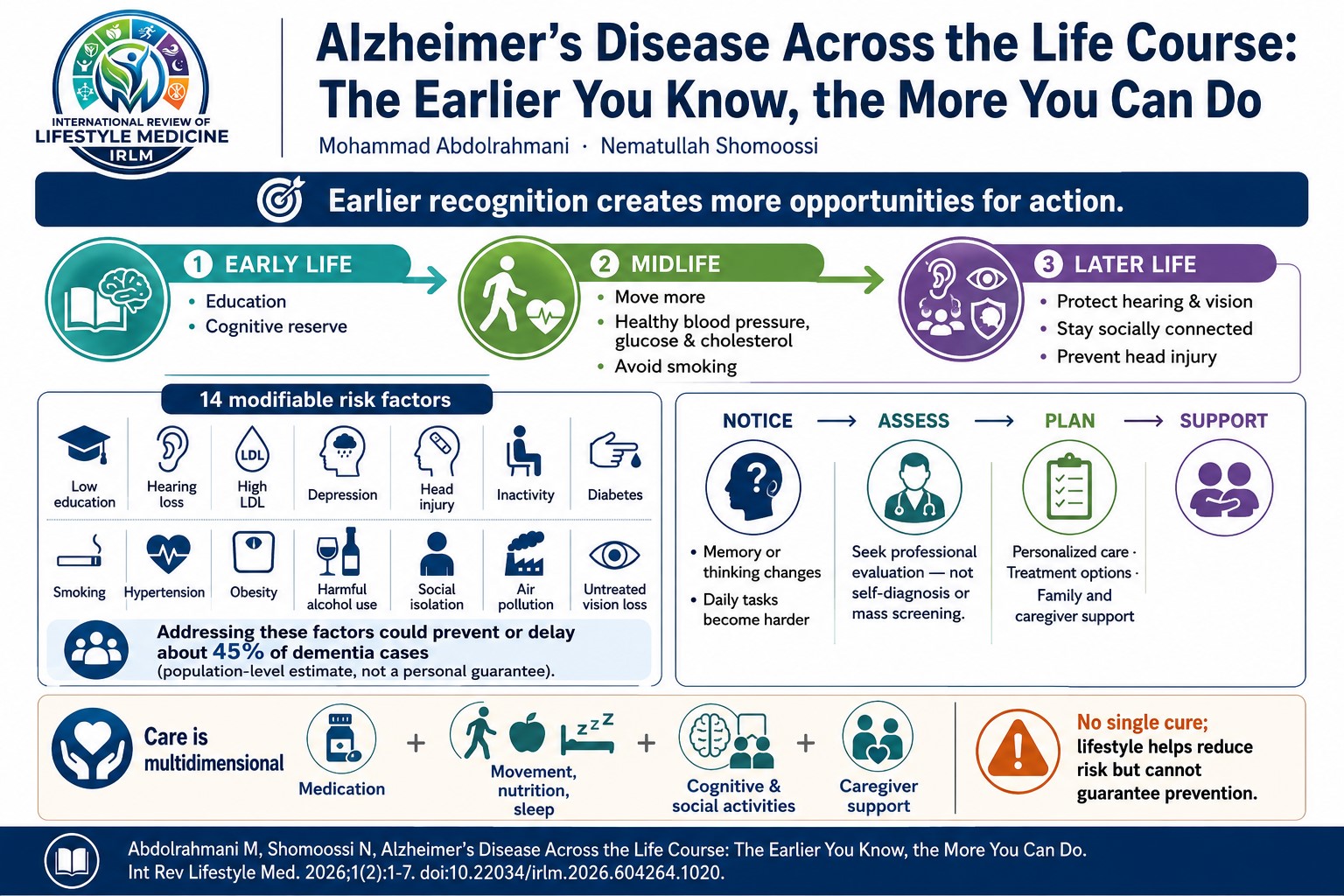
Results: The 2024 Lancet Commission identifies 14 modifiable risk factors across the life course, including limited education, hypertension, hearing loss, smoking, obesity, depression, physical inactivity, diabetes, traumatic brain injury, excessive alcohol use, social isolation, air pollution, untreated vision loss, and elevated LDL cholesterol; addressing them could prevent or delay approximately 45% of dementia cases globally. Early clinical evaluation facilitates accurate diagnosis, exclusion of reversible causes, access to therapies, and person-centered care planning. Effective management integrates pharmacological and non-pharmacological interventions, caregiver support, and attention to social determinants of health.
Conclusion: Public communication should promote awareness without encouraging indiscriminate screening or therapeutic nihilism. Health systems must ensure equitable access to assessment, support, and resources. Implementing evidence-informed and equitable strategies can reduce risk, minimize stigma, and sustain the dignity of people living with dementia.
Graphical Abstract
Keywords
Subjects
 International Review of Lifestyle Medicine