Document Type : Narrative review
Author
Tashkent Medical University, Faculty of Medicine, Tashkent
Abstract
Background and Objective: Sleep disturbances are increasingly recognized as potential contributors to dyslipidemia and metabolic dysfunction. This review examined the relationships among sleep duration, sleep quality, obstructive sleep apnea (OSA), lipid metabolism, inflammation, and related metabolic outcomes.
Methods: A systematic literature search was conducted in PubMed, Scopus, Embase, and Web of Science on January 20, 2025. Studies involving human participants with OSA that evaluated at least one composite lipid index (including the atherogenic index of plasma, lipid accumulation product, or visceral adiposity index) were eligible. Prospective, retrospective, and cross-sectional studies published in English were considered. Following removal of duplicate papers from 177 identified records, relevant original studies were included. Study quality and risk of bias were considered.
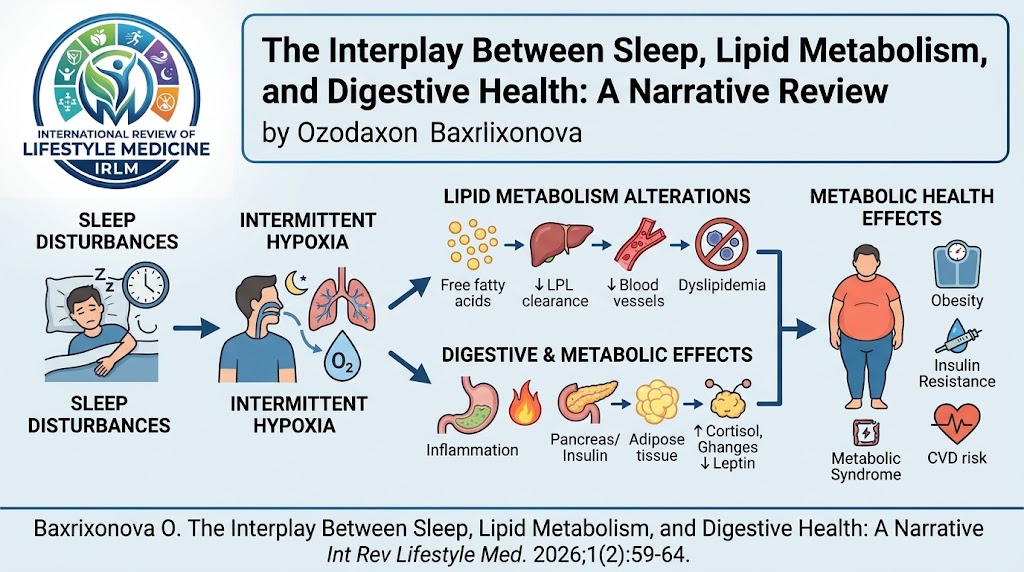
Results: The evidence indicates a complex, often non-linear association between sleep characteristics and metabolic health. Both short and long sleep durations were associated with unfavorable lipid and cardiometabolic biomarkers, including altered high-density lipoprotein, C-reactive protein, glycated hemoglobin, glucose, and insulin levels. In OSA, intermittent hypoxia may promote dyslipidemia through increased free-fatty-acid release, impaired lipoprotein clearance, inflammation, oxidative stress, and hormonal dysregulation. Sleep disruption may also alter cortisol, leptin, and ghrelin secretion, contributing to obesity, insulin resistance, and impaired glucose homeostasis. However, substantial heterogeneity in sleep assessment, OSA diagnosis, populations, and outcome measures limited direct comparisons and quantitative synthesis.
Conclusion: Sleep disturbances, particularly OSA and abnormal sleep duration, may adversely affect lipid metabolism and broader metabolic health. Standardized longitudinal and interventional studies are needed to clarify causality and determine whether sleep-focused interventions improve dyslipidemia, inflammation, obesity, and insulin resistance.
Graphical Abstract
Keywords
Subjects
 International Review of Lifestyle Medicine